10 Best Free SVG Generators in 2026
By Ashesh Dhakal, Founder, SVG AI
free svg generatorbest svg generatorai svg generatorsvg creatorsvg maker
What "free SVG generator" actually means in 2026
Free can mean drawing without a subscription, trying an AI prompt with starter credits, viewing a conversion preview, or downloading a usable SVG. Pick a tool that covers your job and delivery format.
For new artwork, start with the homepage svg generator. For a finished image you want to preserve, use the image to SVG converter. For exact geometry, use a vector editor. Our beginner's guide covers an initial attempt and a focused revision.
I built SVG AI, the prompt-first SVG Creator AI in this list. The examples show its generation and editing workflow. For the other tools, this guide compares their roles and documented access conditions; it does not rank output quality or speed across all ten.
How to compare free SVG generators
Evaluate output quality, time to a usable file, transparency, use rights, prompt fit or edit precision, and learning effort. Use the same deliverable across tools.
The linked plan documentation was checked on September 5, 2026. SVG AI examples include screenshots from May and the FlowMint generation and edit from September. Competitor access details below come from their documentation; they are not results of completed exports in each tool.
Account, generation, preview, and download checkpoints
| Workflow | Starting access | Generation or preview | SVG delivery checkpoint |
|---|---|---|---|
| SVG AI | Account; sign up to get starter credits | Credit cost depends on the model and number of variations | SVG downloads require paid access through an eligible subscription or credit purchase. |
| Recraft | Account and plan | Public page describes vector generation | Free-plan outputs are personal-use only under the linked documentation. |
| Inkscape | Free desktop application | Manual drawing/editing | Save the file; rights to imported assets remain separate. |
| Canva / Kittl | Account and plan | Design canvas or AI features may be available | Verify vector export and use rights on the applicable plan. |
| Vectorizer.AI | Public upload/preview | Pricing page permits preview before subscribing | Subscription required for production downloads. |
Plan details: Recraft ownership, Kittl Free plan, and Vectorizer.AI pricing. Kittl and Vectorizer.AI are additional examples of tools whose previews and final downloads have different access requirements.
The 10 best free SVG generators in 2026, at a glance
| Tool | Role | Check before committing |
|---|---|---|
| SVG AI | Prompt/reference generation | Credits for generation; paid access for SVG download |
| Recraft | Vector generation | Free-plan personal-use restrictions |
| Inkscape | Manual desktop editor | Rights to imported material |
| Figma | Interface/design-system workflow | Workspace, plugin costs, required export |
| Canva | Marketing layout | SVG export and premium assets |
| Boxy SVG | Focused SVG editor | Purchase or trial terms; check before choosing it for a no-cost project |
| Vectr | Browser vector editor | Current plan and export access |
| Adobe Express SVG converter | Existing-image conversion | Current account/download flow |
| PicSVG | Existing-image conversion | Source quality and resulting trace |
| Haikei | Procedural patterns | Asset suitability and terms |
#1 SVG AI
This AI SVG generator creates artwork from a text prompt, a reference image, or both. Sign up to get starter credits. SVG downloads require paid access through an eligible subscription or credit purchase.
Three ways to give it input
Use the SVG Maker AI with text for a new idea, a reference for visual direction, or both for a specific transformation. References are interpreted; choose a converter for a finished image that needs tracing.
Two AI models for SVG generation, plus AI Edit
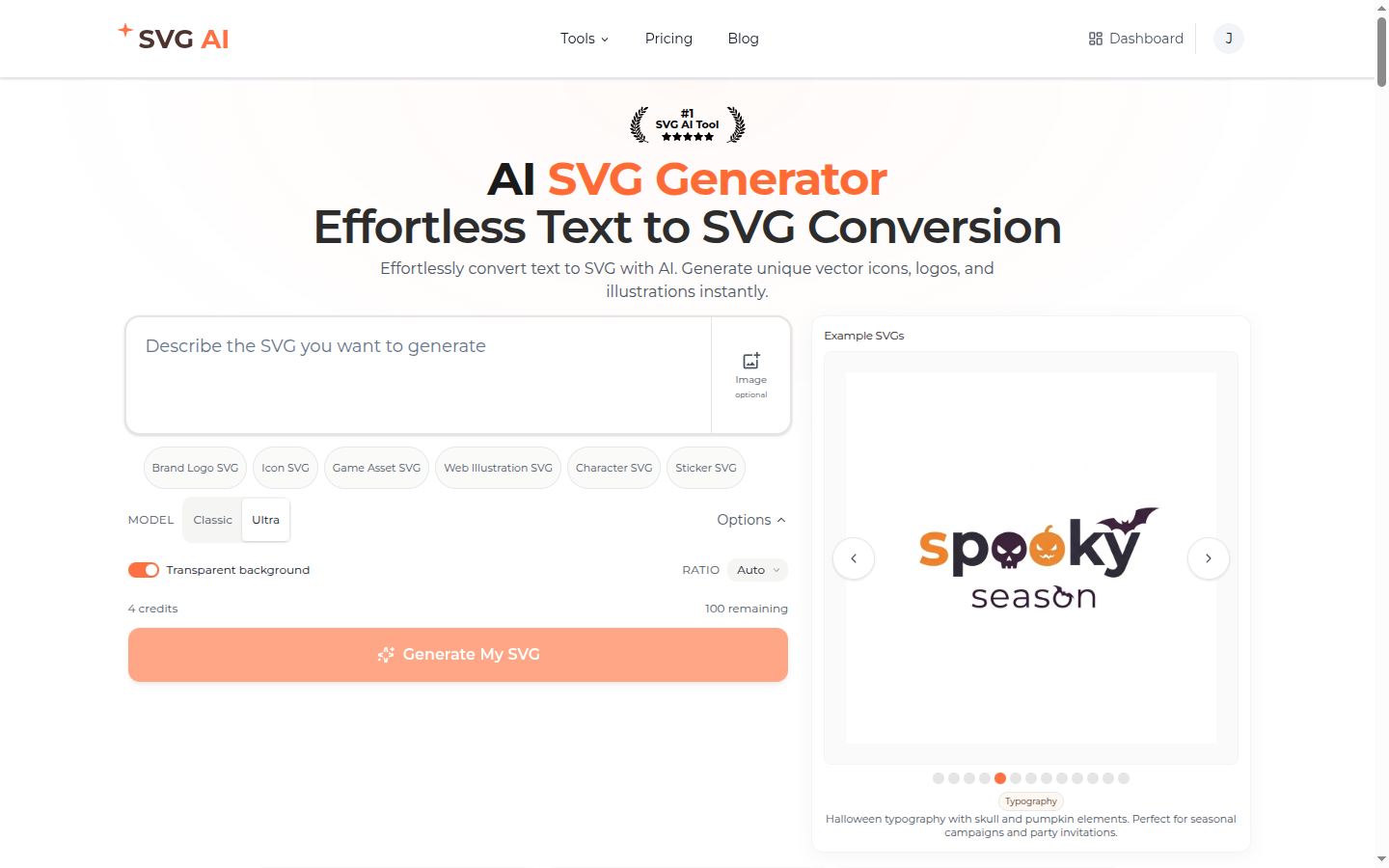
Choose Classic or Ultra in the generation settings. The interface shows the credit cost for your selected model and number of variations. Start with one variation to explore an idea; AI edits use credits separately.
Speed and reliability
Timing depends on the model, queue, and image complexity. Allow time to review the result and make changes, especially for lettering, small icons, or exact brand colors.
What sets it apart
The workflow connects prompts, references, saved projects, refinement, and inspectable SVGs. Exact colors, perfect lettering, and unchanged regions after an edit still need review. The text-to-SVG file exercise shows a useful distinction: real vector paths can still have a different blue from the requested color.
Example: changing a logo's leaf color
On September 5, we generated a fictional FlowMint shield-and-leaf logo in Classic, then asked AI Edit to change only the leaf from green to orange. Compare the original SVG with the AI-edited SVG: the leaf became orange, but the navy color, shape, and framing changed too.


Both files were downloaded using paid access. The full walkthrough includes the prompts and shows how the logo looks at different sizes. For an exact color-only change, use a vector or code editor so the other shapes stay unchanged.
Real examples
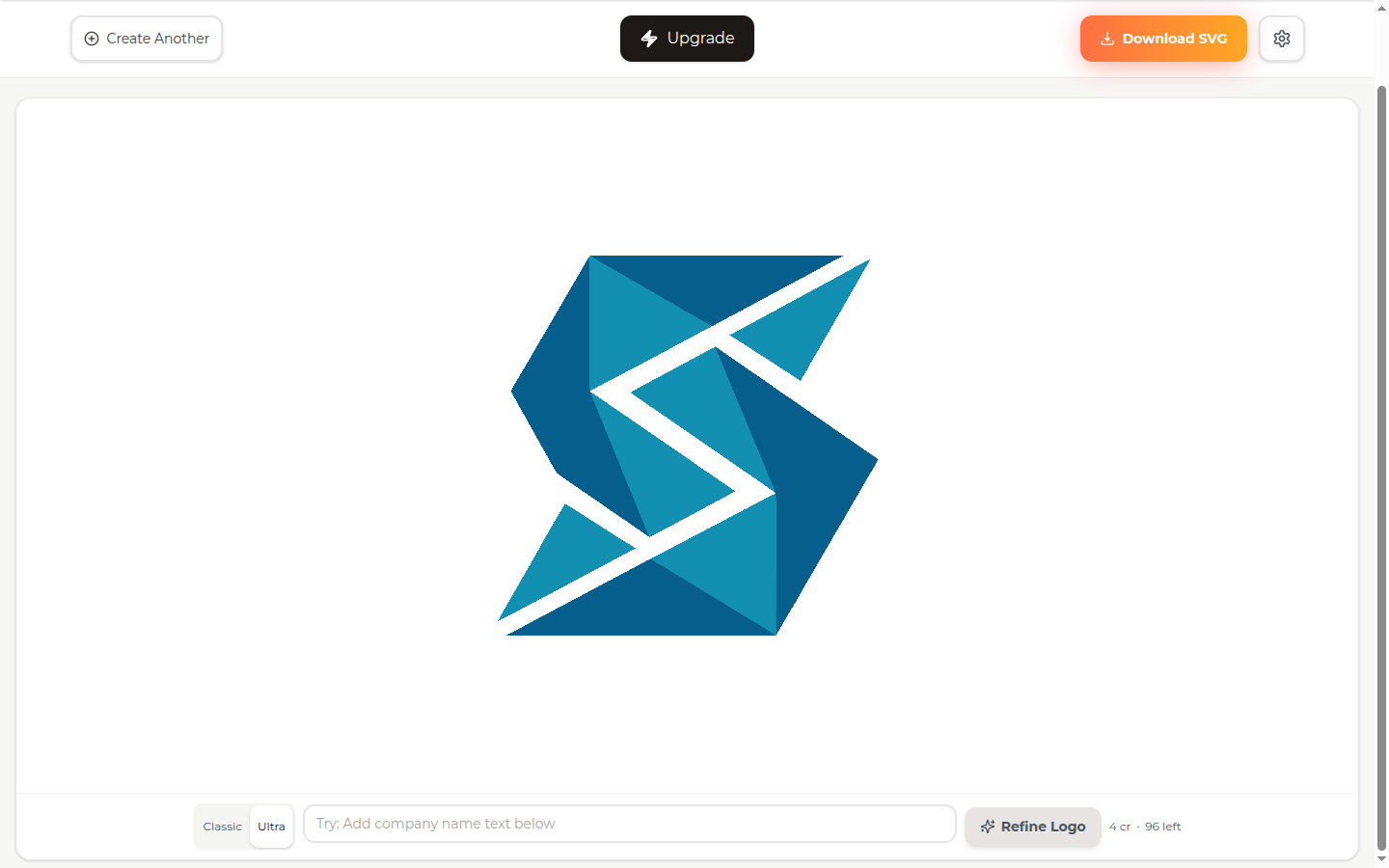
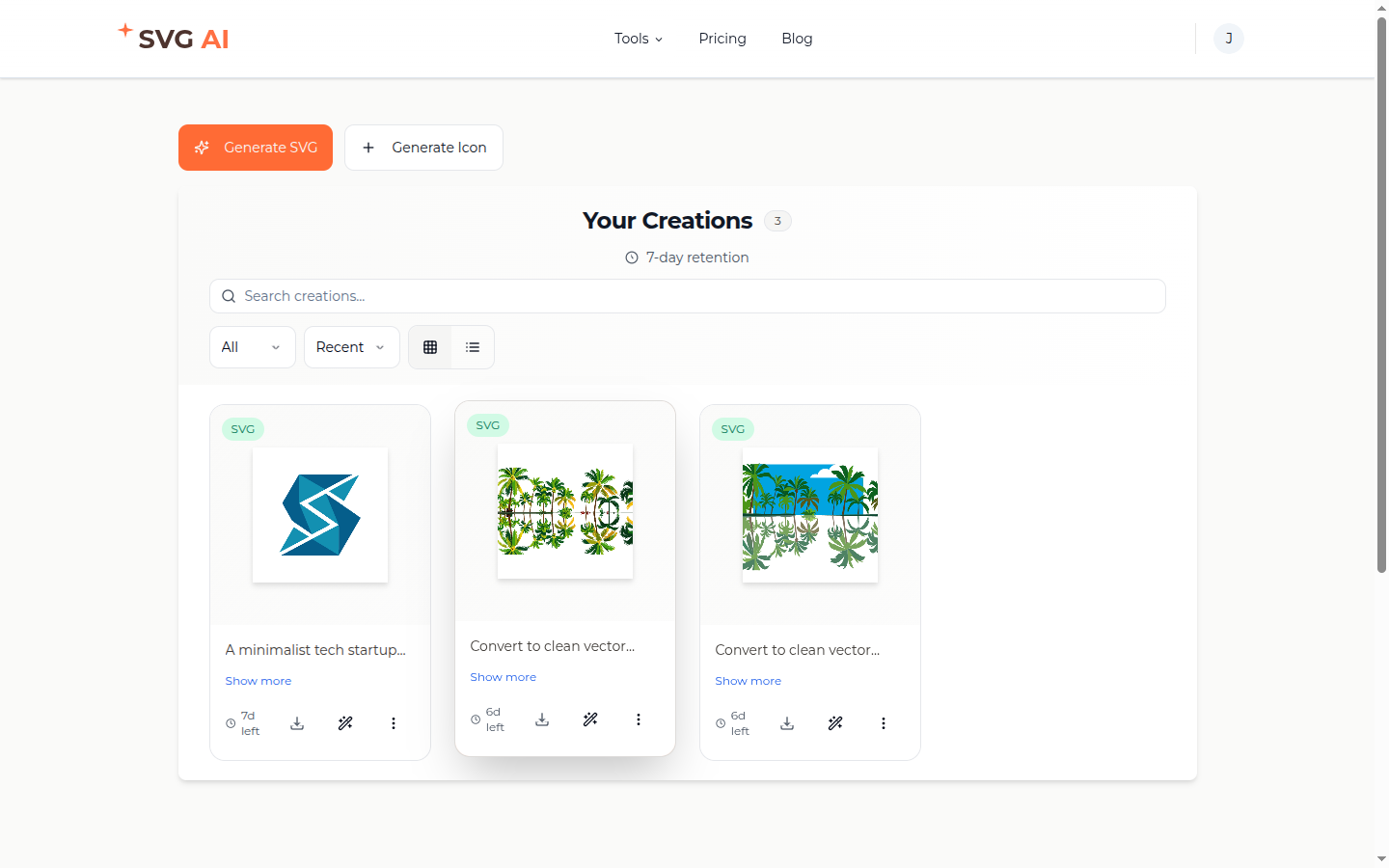
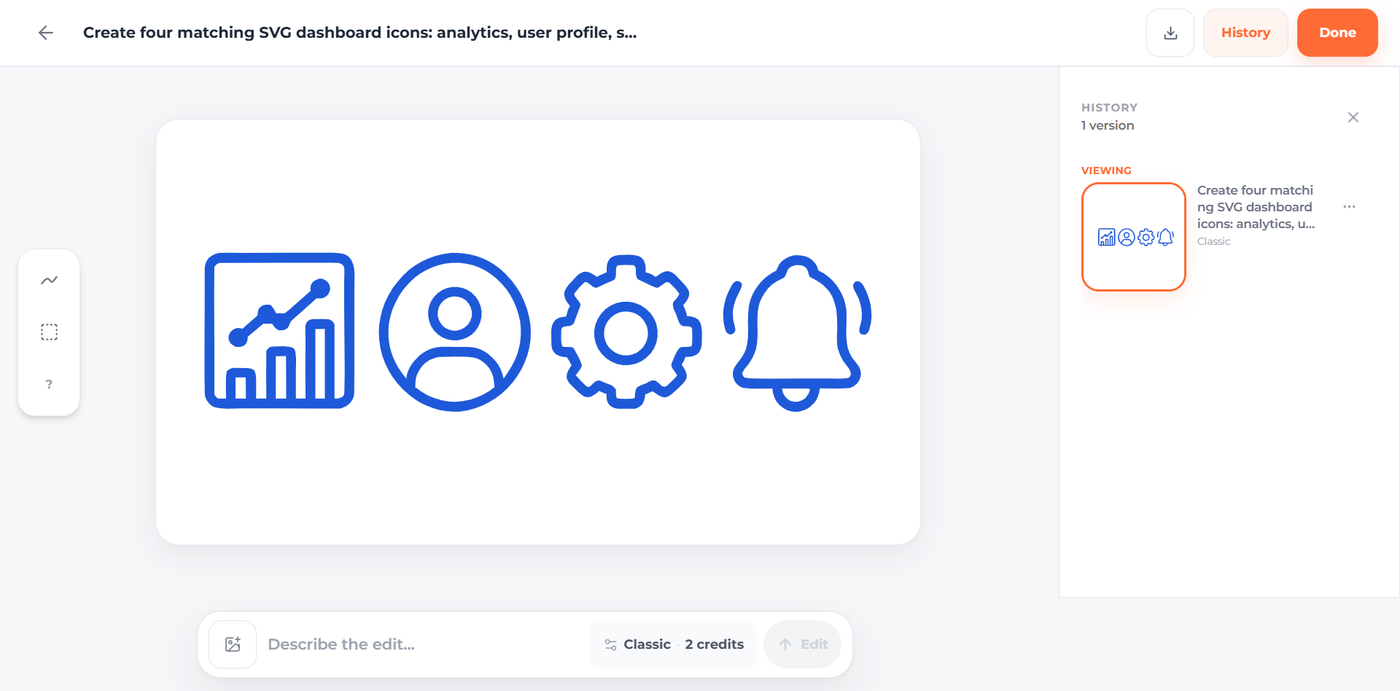
These four examples from May show a logo, a game interface element, and an illustration. Open each SVG to inspect its paths and colors or see how it looks at the size you need.

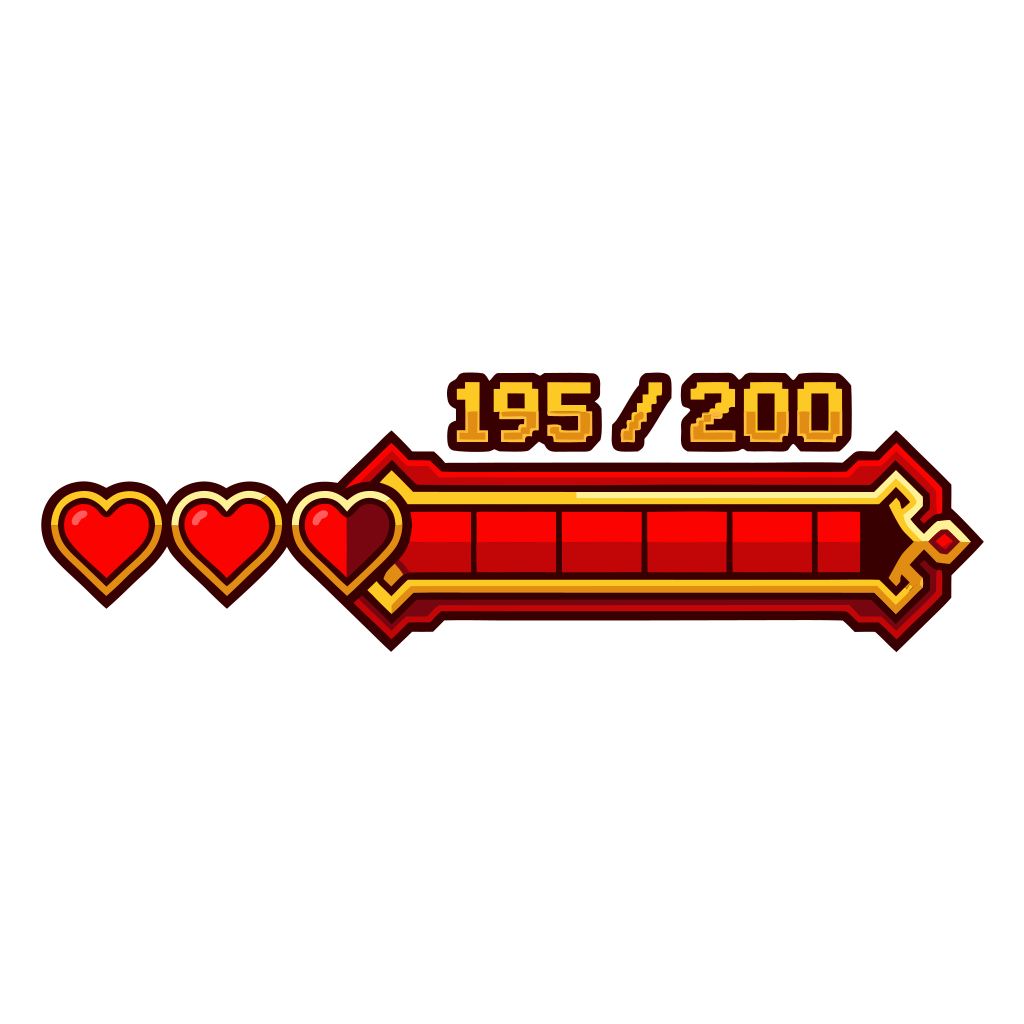

These screenshots show the generation settings, result page, and saved designs in May 2026. Controls and plan details may change.
Limitations to know
Use a manual editor for exact node placement, compare the whole result after an AI edit, and check current download and retention conditions.
#2 Recraft
Recraft describes prompt-based SVG creation, palette changes, and vector export. Its ownership documentation says free-plan images are public, owned by Recraft, and limited to personal use; paid terms differ. Check the plan applicable when an asset is created.
#3 Inkscape
Inkscape is a free desktop vector editor for drawing shapes, editing paths, setting type, and finishing generated artwork. Import a file, inspect groups and clipping, make a named change, save a copy, and compare it in the destination context. Exact manual work takes design effort.
#4 Figma
Figma suits SVG work inside an existing interface design. Draw or import a shape, align it with a component, and check the exported file in the application. Check workspace, AI, and plugin allowances separately when planning a free workflow.
#5 Canva
Canva suits artwork inside a presentation or marketing layout. Its Vector AI page, checked September 5, describes purchasing credits for vector generation. Before investing in a template, confirm the required SVG format, background choice, and premium assets on your plan. A free canvas or PNG download is not proof of a free SVG handoff.
#6 Boxy SVG
Boxy SVG is a focused editor for shapes and vector attributes. Use it when you know the geometry you need. Treat it as a trial or purchase option and confirm the current terms before choosing it for a no-cost project.
#7 Vectr
Vectr is a browser vector-editing option. Try a simple shape and check SVG export in your account before building a larger design. Confirm current plan allowances if a free download is essential.
#8 Adobe Express SVG converter
Adobe Express starts from an existing image. It belongs in the conversion category. Use a clean source and compare gaps, lettering, and silhouette after tracing; verify the current account and download steps.
#9 PicSVG
PicSVG provides a focused image-conversion page with upload and filter choices. Compare its trace with the source, especially small gaps and lettering. It does not generate arbitrary artwork from a text prompt.
#10 Haikei
Haikei creates procedural decorative graphics such as blobs, waves, and patterns. Its public page describes free use without signup and SVG/PNG output. Choose it for a section divider or pattern, not an arbitrary prompt or exact manual edit.
Choosing the right tool: a decision tree by use case
- New artwork: try the free svg generator starting workflow and check export separately.
- Exact cleanup: use Inkscape or an editor you know.
- Existing UI/marketing layout: test that tool's export early.
- Finished raster image: choose a converter and compare with the source.
- Wave or pattern: choose a procedural generator.
The AI SVG generator comparison covers tool choice; the beginner guide covers a first attempt.
Generated images vs. true vectors: why this matters for "free" tools
Paths provide editable geometry; a single embedded bitmap does not offer the same editing or scaling. SVG legitimately supports both. Inspect clipping, gradients, text, and filled background shapes too.
Practice with this example SVG: it contains five paths and no embedded image. Compare its color and aspect-ratio handling with the manually finished version to see what can be adjusted after generation.
Commercial use, attribution, and the hidden cost of "free"
Creation, export, and permission to use an asset are separate. Review service terms and your plan, then check imported artwork, fonts, and templates. Editing a file does not automatically remove third-party rights or establish trademark clearance. Retain the applicable terms with your project.
Frequently asked questions
Can AI generate SVG files without tracing or drawing?
Yes. Prompt-driven workflows can produce vector artwork. Converters begin with an existing image. Inspect the file; its extension does not establish the generation pipeline.
What is the best free AI SVG generator in 2026?
Choose by task and delivery format. SVG AI provides starter credits for trying prompt generation. Check download access separately. Inkscape is free for manual editing.
What is the fastest free AI SVG generator?
Speed varies with the model, queue, and complexity of the image. Compare the time needed to create, adjust, and download a file you can use.
Are free SVG generators really free for commercial use?
Not always. Check the plan and terms, including references, fonts, and templates. Recraft documentation limits free-plan outputs to personal use.
Do I need to sign up to use a free SVG generator?
SVG AI requires an account for generation. Inkscape is a desktop editor; Haikei and PicSVG advertise browser creation or conversion without signup.
Can free SVG generators handle transparent backgrounds?
Many support transparency. Inspect the actual export on light and dark surfaces; a checkerboard preview is not proof of a transparent file.
What file formats do free SVG generators output?
SVG availability depends on the tool, account, and plan. A free preview or PNG download does not establish a free SVG export.
Are AI-generated SVGs good enough for real projects?
Check subject, geometry, lettering, file size, editability, and the intended display or production context.
Can I edit an SVG after I generate it?
Request an AI refinement or use a manual editor. Preserve the source and compare the entire result after a revision.
What is the best free SVG creator that works as well as Adobe Illustrator?
Inkscape provides a free manual vector-editing workflow. Its role differs from a generator that creates a first draft from a prompt.
Check plan details before starting
Free plans can change independently of a tool's features. Before a new project, confirm whether your account includes the AI feature, SVG download, and the usage rights you need. Save a small exported example before investing time in a larger design.
Conclusion
Choose the file you need to deliver. Use a SVG creator for a new idea, a converter for an existing image, or an editor for an exact correction. Test download access and intended use before committing the rest of your time.